
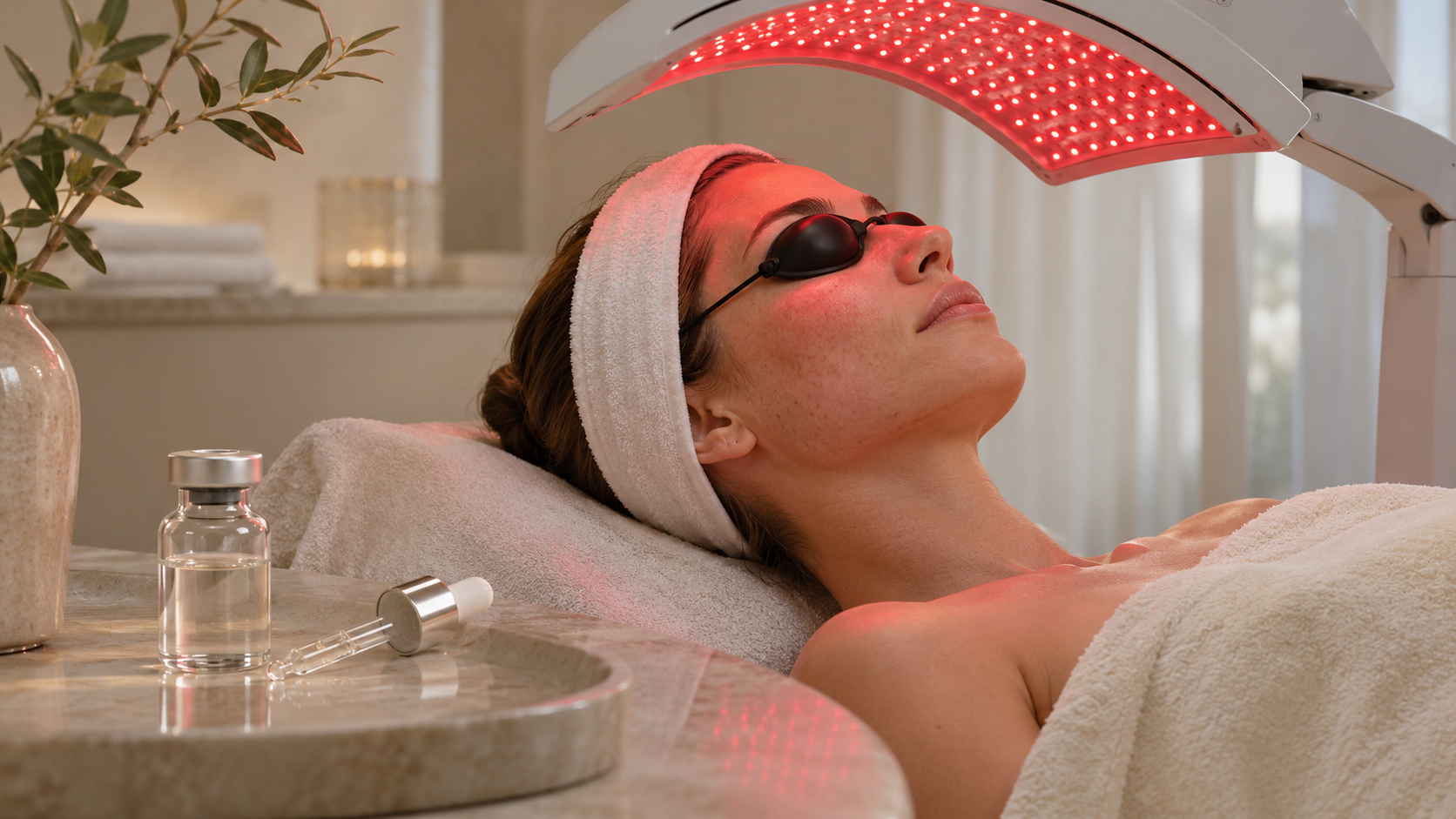
Red light therapy
Red light masks have the strongest human evidence of these three approaches, although more research is needed. Through a process called photobiomodulation, light influences cellular energy production and signals pathways involved in tissue repair. A 2026 systematic review of eight studies involving 365 participants reported improvements in wrinkles, texture, and elasticity, with generally mild, temporary side effects. However, studies remain relatively small, treatment protocols differ, and broader representation of skin tones is needed. The improvements should be viewed as modest and gradual, rather than the dramatic transformation sometimes suggested by marketing. My recommendation is to consider a device supported by clinical studies, follow its instructions consistently, and maintain an effective skincare routine. Not everyone is a candidate, make sure to check with your dermatologist before investing in a mask.
PDRN (Salmon DNA)
PDRN, often marketed as “salmon DNA,” consists of purified DNA fragments studied for their potential to support tissue repair. Research suggests that PDRN can influence cellular repair signals and provide building blocks that cells can reuse. Its wound healing research is encouraging, but cosmetic rejuvenation is a separate question, and evidence for topical skincare remains limited. One randomized study of 31 women found that a specific PDRN eye cream improved measured eye area wrinkles and skin properties compared with a 0.1% retinol cream over 28 days. This finding deserves further investigation, but a small, brief study cannot establish lasting superiority to retinoids or validate every PDRN serum. The formulation and method of delivery matter, and results from injections cannot automatically be applied to a cream.
Exosomes
Exosomes are microscopic vesicles released by cells that carry biological signals, including signals involved in inflammation and repair. Early studies suggest potential benefits for skin quality, sometimes when used alongside microneedling or lasers, but the clinical evidence remains preliminary. Products differ substantially in their source, preparation, and contents, making results difficult to compare or generalize. Safety also depends on how a product is used: applying a serum to intact skin is different from introducing it through a procedure or injection. Published reports have described serious complications, including skin tissue damage after exosome injections, and the FDA states that there are no FDA approved exosome products. For now, I would approach these treatments cautiously rather than consider them an established skincare essential.
A thoughtful approach
My approach is to remain open to innovation while being selective about what earns a place in your treatment plan. A higher price or a newer ingredient does not necessarily mean better results. Your routine should reflect your skin concerns, tolerance, goals, and budget, with each product or procedure serving a clear purpose. If you are considering a new device, ingredient, or treatment, a consultation offers an opportunity to review the evidence and determine whether it makes sense for you. Contact Chiara Skin Clinic to schedule your personalized skincare consultation and build a thoughtful plan for your skin.
Happy November!
Dr. Tempera